
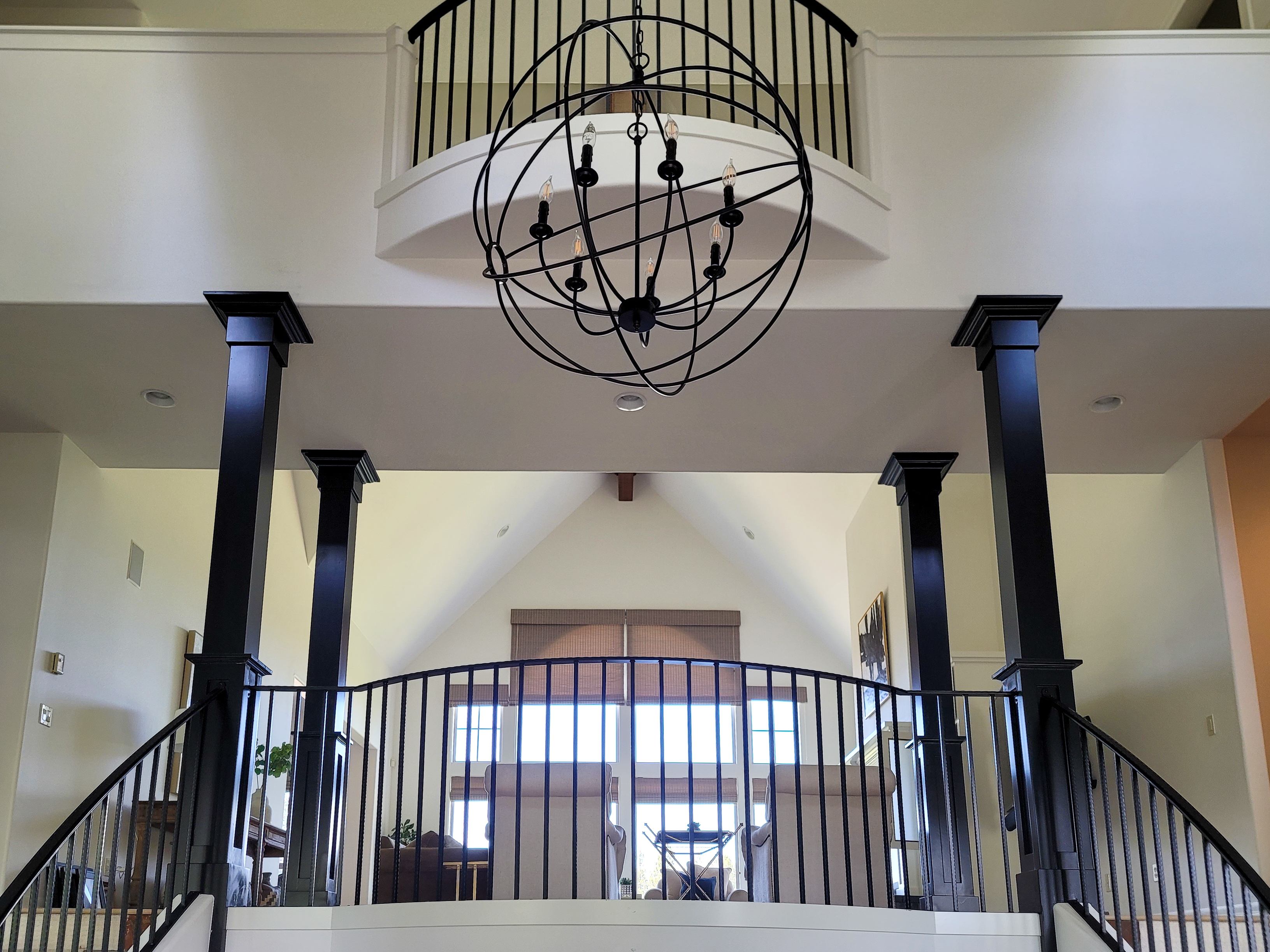
Crown Molding vs. Ceiling Beams: Which Is Right for Your Redmond Home?
When you are updating the interior of your home, it is easy to focus on the obvious things first like new flooring, cabinets, paint, lighting and furniture usually get most of the attention. However, sometimes, what makes a room look finished is something much less obvious: the woodwork around it. Crown molding and ceiling beams are two good examples. Both can add character to a room, but they create very different effects. One can give the walls and ceiling a clean, finished transition, while the other can become a major architectural feature.
For homeowners considering custom woodworking in Redmond, Oregon, the choice often depends on the home's existing style, the size of the room and what you want the finished space to feel like. Master Carpenters are your go-to when it comes to any custom woodwork, whether crown molding or ceiling beams. Read on to learn more about the same.
What Does Crown Molding Do?
Crown molding runs along the point where the wall meets the ceiling. It has been used in homes for generations, but that does not mean it has to look old-fashioned. The profile, width and material make a big difference.
A simple piece of crown molding can work well in a modern home, while a larger or more detailed profile may suit a traditional interior. Custom molding also gives you the opportunity to get the proportions right for your particular room instead of settling for whatever sizes happen to be available at a home improvement store. This becomes especially useful in homes with tall ceilings, unusual room dimensions or other architectural details that need to work together.
Crown molding can also be carried through several areas of a house. When the same design language is used around doors, windows, baseboards and ceilings, the rooms tend to feel more connected.
Where Do Ceiling Beams Work Best?
Ceiling beams have a completely different presence. Rather than finishing the edge of a room, they draw attention upward. Depending on their design, they can make a large room feel more defined or bring some warmth into a space with a lot of open ceiling area. They are particularly effective in great rooms, kitchens, dining areas and rooms with vaulted or high ceilings.
The style of the beam matters, too. A heavily distressed beam can create a very different look from a clean, square timber. In a contemporary home, simpler beams may be the better choice. In a more traditional or rustic setting, there may be room for more substantial woodwork. This is where having the beams designed for the room can make a noticeable difference.
Which One Should You Choose?
There is no rule saying that one is better than the other.
If your main goal is to give the room a finished appearance, custom crown molding may be the better option. It can add detail without becoming the main feature of the space. If the room feels too open or the ceiling needs more visual interest, beams may have more impact.
It is also worth looking at what the home already has. Adding elaborate crown molding to an otherwise very simple interior may not make sense. Likewise, large ceiling beams can overwhelm a small room if they are not properly scaled. Good architectural trim should look like it belongs there.
What About Using Crown Molding and Beams Together?
In the right room, the two can work very well together. For example, a large living room with decorative ceiling beams can still benefit from crown molding around the perimeter. The beams give the ceiling some structure, while the molding creates a finished transition around the room.
The same idea can be applied to other details, such as custom window casings, door casings and baseboards. Instead of choosing each feature separately, it is often better to think about the trim throughout the room as one design. That way, the different pieces complement each other instead of competing for attention.
Custom Trim Is About More Than Appearance
One of the advantages of working with a custom carpenter is being able to build the woodwork around the actual house. Walls are not always perfectly straight and ceiling heights vary. Corners, doorways and windows can all present their own challenges. Standard trim can certainly be used in many homes, but custom work gives you more control over how those details come together. This is particularly important with high-end interiors, where small gaps or poorly matched profiles can stand out.
Experienced finish carpentry in Redmond, OR is not simply about cutting and attaching pieces of wood. Measurements, joints, proportions and installation all affect how the finished work looks.
Consider the Rest of the Room
Before deciding on crown molding or ceiling beams, take a look at the other materials and features in the space. What type of flooring do you have? Are the cabinets simple or detailed? Do the doors and windows have substantial trim? Is the ceiling high enough to support a larger feature? These questions may seem minor, but they help determine what will actually work.
A room does not necessarily need more detail. It needs the right detail. For some homes, that might mean a clean custom trim package throughout the main living areas. For another, it might mean a set of carefully designed beams above a kitchen or great room. In some cases, combining several elements creates the best result.
Why Architectural Woodwork Is Worth Planning Carefully
Woodwork becomes part of the house once it is installed. Unlike a piece of furniture, it is not something you can simply move to another room if the proportions do not work. That is why planning matters.
A good custom woodworking project starts with the space itself. The design should take into account the home's architecture, the way the room is used and the style the homeowner wants to achieve. At Master Carpenters, custom millwork and architectural detailing can include everything from crown molding and ceiling beams to custom built-in cabinetry, doors, libraries and other one-of-a-kind wood features. The goal is to make those details feel intentional and appropriate to the home rather than simply adding decoration.
Making the Decision
If you are deciding between crown molding and ceiling beams, start with the room rather than the material.
A room that needs a cleaner transition between the walls and ceiling may benefit from crown molding. A large or vaulted space that feels a little empty overhead may be better suited to beams. If you are working on a larger renovation, there is no reason to limit yourself to one feature. Custom trim, cabinetry, beams and other architectural details can all be planned together so that the finished interior has a consistent look.
For homeowners in Redmond, Oregon, Central Oregon and nearby communities, custom carpentry can be a practical way to add details that are specific to the home rather than relying entirely on standard materials. The right woodwork does not have to be the first thing you notice when you walk into a room. Often, the best result is when everything simply looks like it belongs together. Get in touch with Master Carpenters and get the best custom woodwork done that does not only look good but also lasts for years to come.
▶ Semantic Keynotes & Named Entity Recognition (NER) Tags
Master Carpenters
1262 SW 18th St, Redmond, OR 97756
(971) 386-3210
demrenharndenllc@gmail.com